
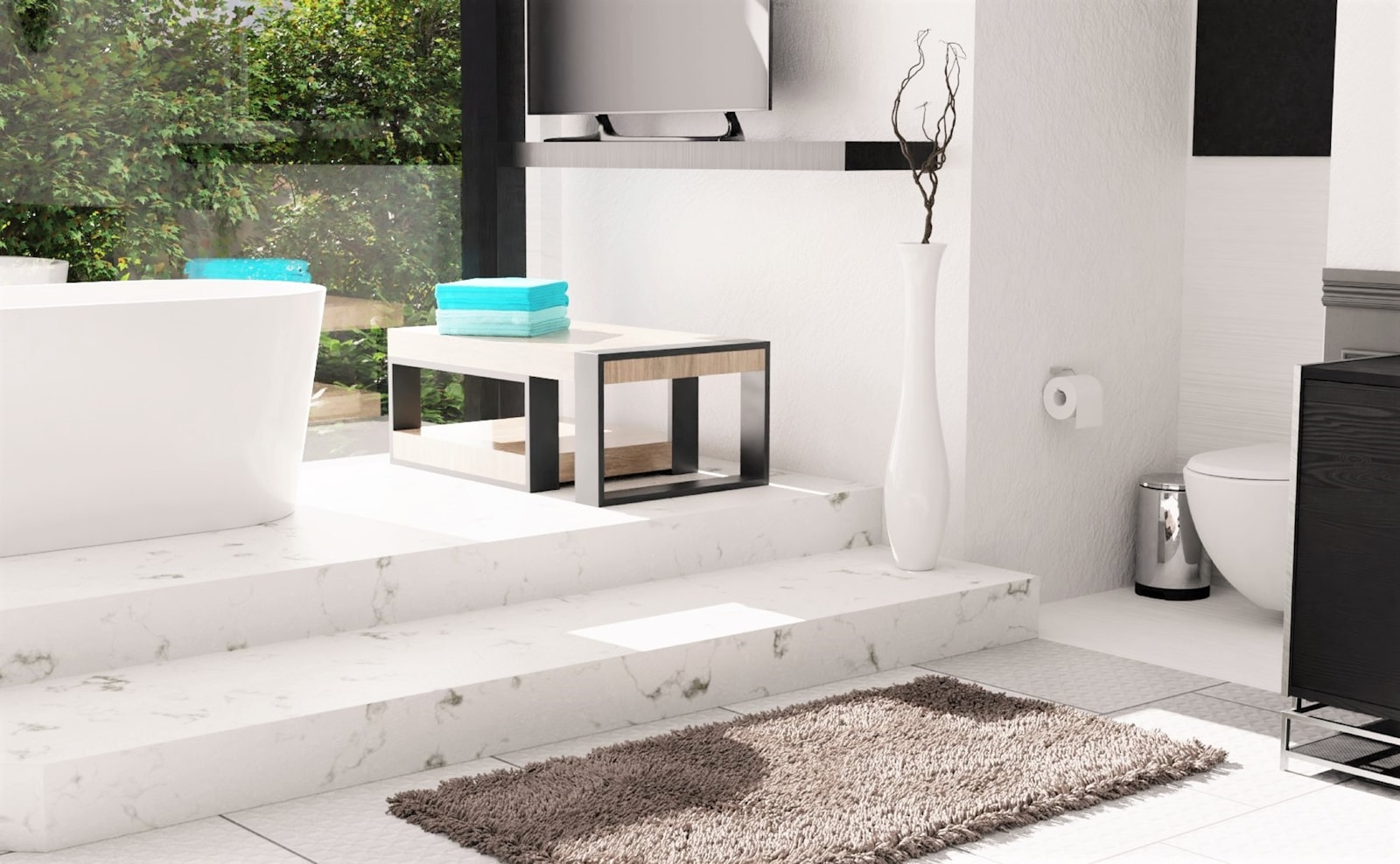

A bathroom that looks central is not always inside the center palace. The center is measured from the home's full footprint, so recessed walls and irregular outlines can shift it away from where you expect.
Verify the position before buying remedies. Once the bathroom's relationship to the true center is clear, the appropriate level of adjustment is much easier to judge.
Want to check your own layout instead of guessing? Run your floor plan through the free nine-grid tool.
Not every "center bathroom" is actually central
The center in feng shui means the center of the full home footprint. Not the center of the living room. Not the center of the hallway. Not the middle of whatever room you hang out in most.
Three mistakes cause most misjudgments:
- They look only at interior rooms and ignore the full outline of the home
- They treat a balcony cutout or recessed wall like it doesn't shift the center
- They eyeball it without checking the overall shape first
If your home is irregular, L-shaped, or has deep cut-ins, the bathroom might look central while actually sitting off-center once you map the full boundary correctly.
Why the center matters
The center palace acts like the stabilizer of the whole layout. When the center feels damp, dark, or constantly draining, people tend to experience the rest of the home as less settled.
A bathroom in the center is sensitive for practical reasons just as much as symbolic ones:
- Bathrooms introduce moisture, plumbing, and frequent drainage
- The center works best when it feels calm, open, and stable
- If the center doubles as a circulation zone, clutter and humidity spread their effect further
This does not make the whole home unfavorable. It means the center needs more consistent care.
Entry sees the toilet? That's a separate issue
Two different problems are often confused:
- The toilet lands in the center palace
- The toilet is visible or strongly aligned with the main entry
These can overlap, but they're not the same thing.
When the entry looks directly toward the toilet, the problem is more about sightline, privacy, and fast energy loss. When the toilet sits in the center, it's more about stability and the feel of the middle zone.
If your home has both, start with the entry sightline. It is usually easier to correct and more noticeable in daily use.
Step 1: confirm the true center before changing anything
You can make a preliminary manual check:
- Draw or trace the outer boundary of the entire home.
- Ignore furniture. Focus on the real built footprint.
- Fit a three-by-three grid over the full shape.
- See whether the bathroom falls mainly inside the center square or only clips one side of it.
If the bathroom only touches the edge of the center square, the adjustment strategy is often much lighter than for a bathroom that fully occupies the middle.
Step 2: control dampness and visual noise first
Before changing colors or adding objects, correct the way the bathroom is maintained:
- Keep the bathroom dry
- Keep the exhaust working well
- Close the toilet lid
- Close the bathroom door when it's not in use
- Repair leaks immediately
These basic measures matter more than decorative cures. A dry, orderly bathroom creates far less pressure than a humid, cluttered one in the same position.
Step 3: strengthen the center with calm, grounded materials
The center benefits from steadiness, so the bathroom should feel contained and settled. Useful choices include:
- Use warm neutrals rather than stark black-and-white contrast
- Prefer stone-like, ceramic, or matte finishes over slippery mirrored glare
- Reduce excessive water imagery, deep black accents, and chaotic prints
- Keep storage simple so surfaces stay visually quiet
The aim is not to add lucky objects. It is to reduce the damp, unsettled quality of the center.
Step 4: don't forget the area outside the bathroom
If the bathroom is central, the area around it matters too. Check the zone immediately outside the door:
Stand just outside the bathroom and ask yourself:
- Is the path cramped?
- Is there too much visual mess?
- Does the center feel dim or neglected?
- Does the bathroom visually dominate the middle of the home?
Useful fixes outside the room:
- Improve the light in the surrounding area
- Remove storage overflow near the bathroom entrance
- Keep the central path easy to walk through
- Use one calm grounding element, such as a rug, console, or soft wall color
What not to overdo
Expensive cures and complicated ritual objects can add more visual noise than stability. Avoid these approaches:
- Buying a bunch of symbolic items without fixing your daily layout habits
- Adding strong red or loud colors just because someone called the space "weak"
- Crowding the center with plants, objects, or mirrors in every direction
- Treating every central powder room like it's a disaster
Good correction feels simpler, cleaner, and more stable. If the fix adds noise, it's probably moving in the wrong direction.
A reasonable priority order
If you have one weekend, use this order:
- Verify whether the bathroom is truly central
- Dry the space and remove clutter
- Soften the visual pressure around the bathroom
- Simplify the center of the home outside the room
- Only then fine-tune colors and materials
This order usually produces the clearest result without overcomplicating the space.
When the tool beats hand-guessing
Manual checking works well for a simple layout. It becomes less reliable with:
- An L-shaped footprint
- A recessed entry
- A large balcony cutout
- An angled wall that shifts the perceived center
- Multiple wet rooms close to the middle
In those cases, guessing the center by eye creates more confusion than clarity.
To verify whether the bathroom really presses on the center palace, mark the layout in the nine-grid wizard. It helps distinguish a true center-bathroom issue from one that only appears central.