
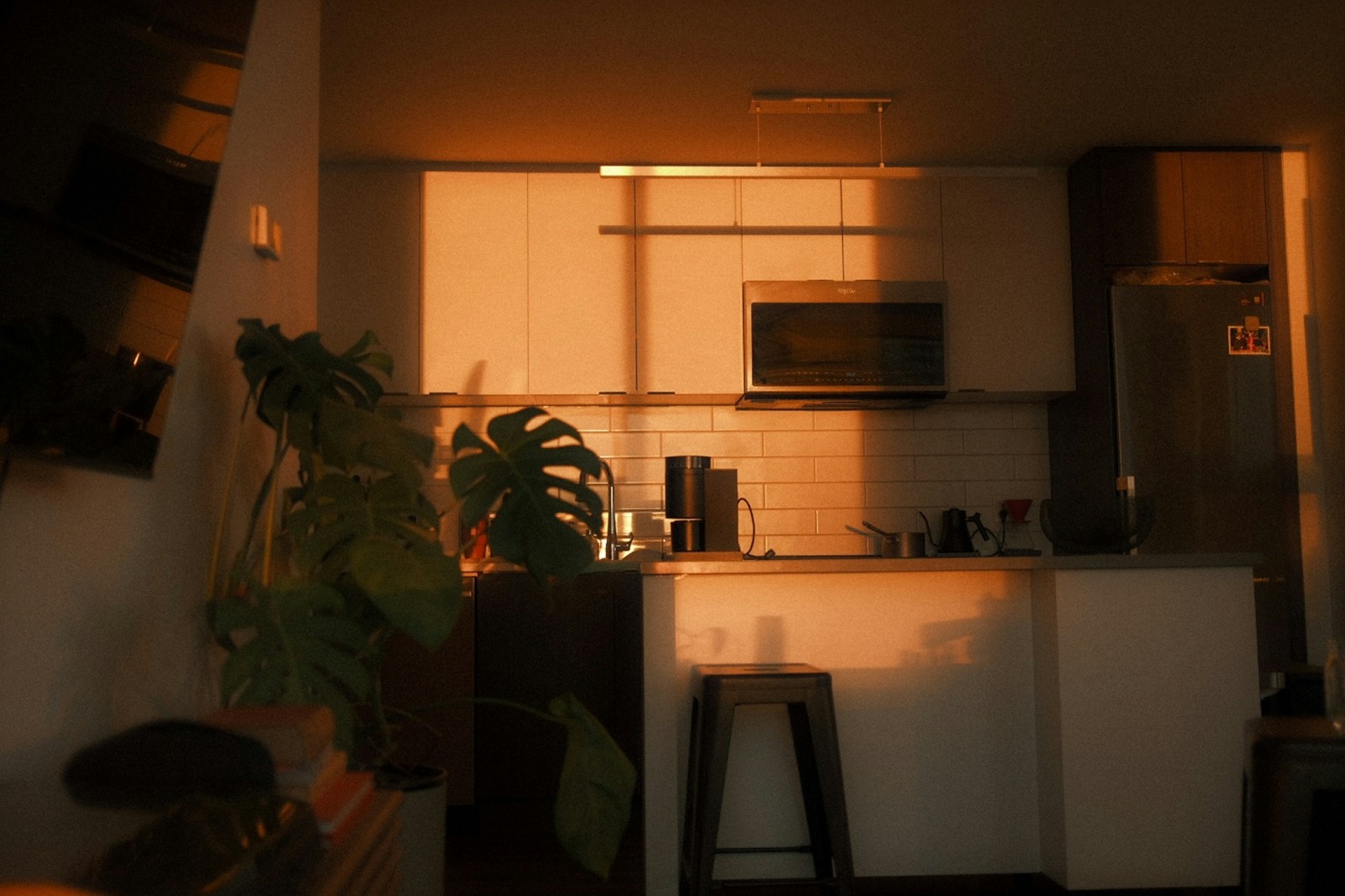

A kitchen described as northwest does not automatically require a major remedy. First confirm whether the room really occupies the Qian palace and whether its heat, colors, and daily use are pushing the fire quality too far.
The kitchen's exact position, the stove location, accumulated heat, color palette, and daily use all affect the diagnosis.
Want to confirm whether your kitchen really sits in the northwest sector? Mark the kitchen directly in the nine-grid tool.
"Somewhere near the northwest" doesn't cut it
Seeing the kitchen in the upper-right corner of a floor plan is not enough to identify its palace accurately.
What you actually need to check:
- How the nine-grid overlays onto your full footprint
- Whether the main body of the kitchen truly sits in the Qian palace
- Whether only the edge of the room clips that sector
- Whether the kitchen spans more than one palace
If just one edge of your kitchen touches the northwest, the fix is usually much lighter than when your entire cooking zone sits squarely in that palace.
Why the northwest kitchen receives attention
The northwest is traditionally associated with the Qian palace and qualities such as steadiness, authority, support, and structure. Kitchens bring heat, intensity, speed, and constant daily activity.
That's why this combo gets flagged so often. But the issue isn't that "the northwest can never have a kitchen." It's that the palace can feel overwhelmed when the room runs too hot, looks too fiery, and dominates the home's energy.
And that's exactly why two homes with "northwest kitchens" can feel completely different from each other.
What actually makes it worse
The problem usually hits harder when several of these stack up:
- The stove is the visual center of the room
- Red, orange, or aggressive warm tones dominate the palette
- Grease, heat, and clutter make the space feel constantly overactive
- Too many appliances crammed into a compact room
In many cases, the issue is not the label "northwest kitchen" itself, but an overcharged fire atmosphere within that sector.
First fix: turn down the visible fire
This matters more than buying symbolic cures.
Start here:
- Dial back strong warm-color dominance
- Simplify the countertop and what you see at a glance
- Get better control over heat, smoke, and lingering grease
- Don't let the stove area become the first aggressive focal point when you walk in
These changes often do more than trying to counterbalance the room with objects.
Second fix: make the kitchen steadier, not emptier
Overcorrecting a northwest kitchen until it feels cold, white, and lifeless also misses the goal.
A better direction:
- Lean on neutral, earthy, or wood tones instead of piling on more heat
- Keep lines clean and task zones clearly defined
- Get better separation between stove, sink, and prep areas
- Stop the room from screaming "fire" everywhere at once
The aim is not to remove warmth, but to keep it from feeling concentrated and uncontrolled.
If the stove itself is in the northwest, pay closer attention
A kitchen in the northwest and a stove in the northwest aren't the same severity level.
If the kitchen only partly overlaps with that sector and the stove is elsewhere, the issue is lighter. Priority rises when:
- The stove itself clearly sits in the northwest palace
- It's the strongest heat source and the visual anchor of the room
- The rest of the space reinforces that fire quality through color and clutter
That combination deserves a more thoughtful adjustment plan.
Don't overcorrect
Excessive correction can make the kitchen less comfortable and useful.
Avoid these traps:
- Treating every northwest kitchen like it's a five-alarm emergency
- Piling in metal objects without improving order and heat balance first
- Making the kitchen so cold and hard that it's miserable to cook in
- Doing a major redesign before even confirming the kitchen truly occupies that sector
A good correction should make the kitchen calmer, clearer, and easier to use, not sterile.
Quick way to gauge your priority
If two or more of these are true, it's worth a closer look:
- Your kitchen clearly occupies the northwest sector
- The stove is in there too
- The room already feels hot, visually loud, or cluttered
- The kitchen dominates the rest of the home instead of blending in
If only one applies, the situation is probably lighter than the label suggests.
When the tool beats hand-judging
Manual checking gets unreliable when:
- The kitchen spans more than one sector
- Your layout is irregular
- The kitchen is open-plan with the living area
- The stove and the kitchen body occupy different zones
These are the cases in which a partial overlap is most easily mistaken for full occupation of the northwest.
To confirm whether the kitchen really occupies the Qian palace, map it directly in the nine-grid tool. The result provides a firmer basis for choosing between a light correction and a more deliberate adjustment.