
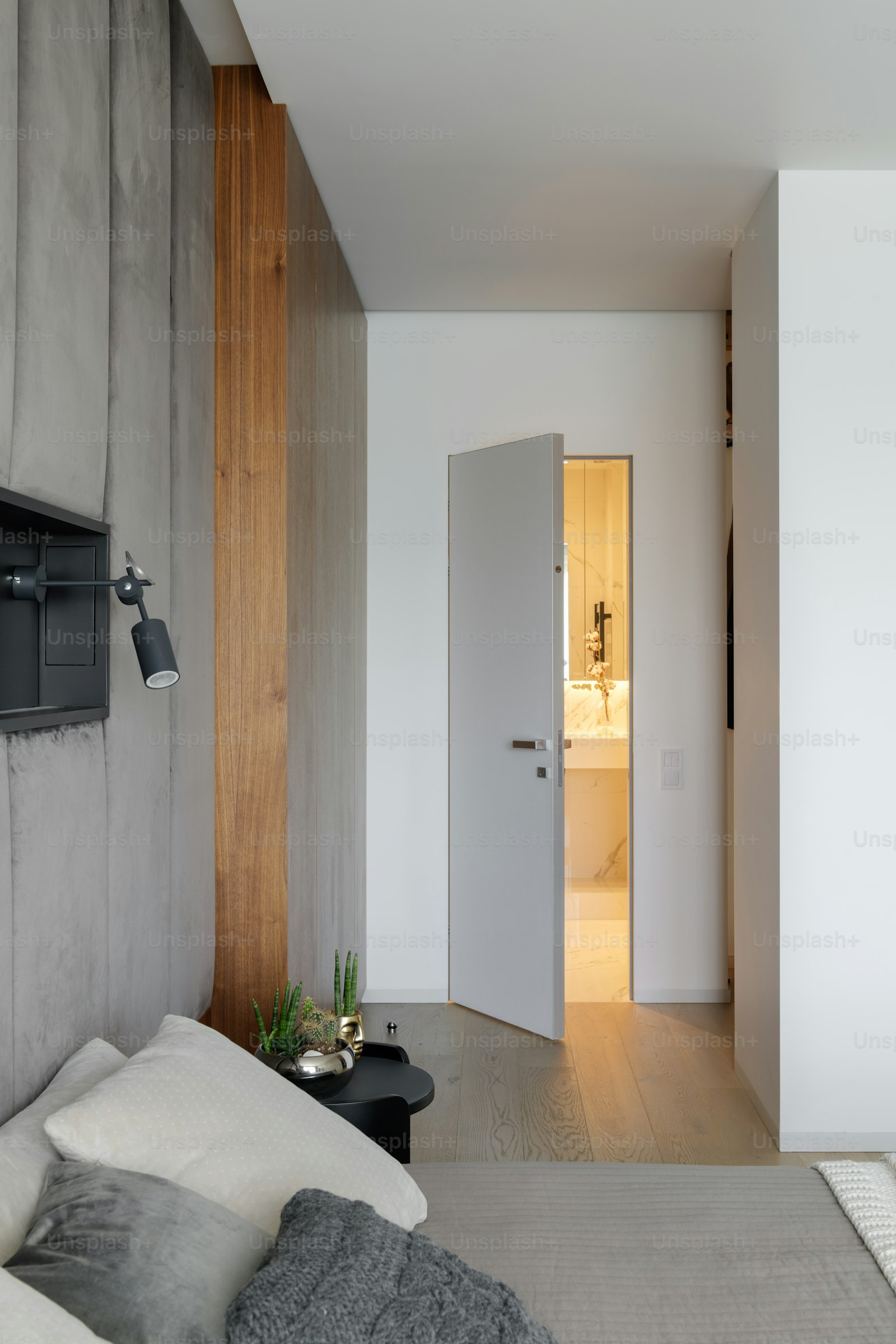

A bathroom beside a bedroom is not automatically a serious feng shui problem. A bathroom across a hallway is quite different from one that shares a thin wall with the headboard.
Check whether the rooms share a wall, whether the bathroom door opens toward the bed, whether dampness or smells reach the sleep area, and whether nighttime use disrupts rest.
Want to see how your bedroom and bathroom actually relate in the full layout? Drop both rooms into the nine-grid tool and find out.
"Next to" can mean a lot of things
The same phrase can describe at least three different arrangements:
- The rooms are nearby, with a closet, hallway, or solid structure between them
- They share a wall directly
- They share a wall and the bathroom door faces right into the bedroom
These arrangements do not carry the same weight. The practical sources of discomfort are more specific:
- Hearing pipes or the exhaust fan while you're trying to sleep
- Feeling dampness near the bed
- Looking straight at the bathroom door from where you lie down
- Having your headboard backed up against the bathroom wall
Why feng shui flags this layout
Bedrooms should feel calm, grounded, restful. Bathrooms are wet, draining, and get bursts of activity throughout the day.
Without enough separation, the bedroom may feel:
- Less settled than expected
- Short on privacy
- Difficult to relax in
- Acceptable on plan, but uncomfortable in daily use
These effects are not only symbolic. Noise, moisture, sightlines, and nighttime movement can all affect daily comfort.
Three things to check first
1. Is your headboard against the bathroom wall?
This is often the most noticeable arrangement. The most important part of the sleep setup is placed directly against plumbing and moisture, regardless of compass direction.
2. Does the bathroom door face your bed?
If you can see the bathroom door from your bed or from the main open space in the bedroom, the sense of intrusion is much stronger than when the rooms just happen to share a side wall.
3. Is the path from bed to bathroom way too short?
In smaller apartments especially, you might be just a couple of steps from bed to bathroom with zero transition. It doesn't always make things terrible, but it does make the bedroom feel more like a passageway than a place to rest.
Fix the boundary first, not the decor
Before adding decorative cures, create a clear sense of separation.
Start with the basics:
- Keep the bathroom door shut when it is not in use
- Deal with moisture, smells, and ventilation properly
- Don't let clutter pile up around the bathroom doorway
- Use a rug, a narrow cabinet, a curtain, or even just different lighting to mark the transition
- If the headboard is on the bathroom wall, try moving the bed first or add a solid layer on that side
The aim is simply to restore the bedroom's sense of rest and enclosure.
When it is not a high-priority issue
If the rooms look close on the floor plan but in real life:
- There is a solid wall, closet, or storage space between them
- The bathroom door doesn't face the bed
- Ventilation works well and there is proper dry-wet separation
- Your actual sleep zone is away from the bathroom threshold
Then this probably is not your top priority. A bathroom visible from the front door or a layout with no transition may deserve attention first.
Questions that change the diagnosis
The details that change the answer are more specific than simple proximity:
- Is my headboard literally on the bathroom wall?
- Do I leave the bathroom door open out of habit?
- Do the bedroom and bathroom doors face each other?
- Is there actual moisture, smell, or fan noise coming through?
- Does getting up at night to use the bathroom keep disrupting my sleep?
Those are the things that tell you whether this is worth fixing or just worth noting.
When to stop guessing and actually check
Your memory of the layout gets unreliable when:
- There is a closet, dressing area, or hallway between the rooms, and the amount of separation is unclear
- The floor plan is irregular and things might be closer (or farther) than you think
- You want to see how the bedroom and bathroom sit inside the full nine-grid picture
- You need to compare it with the front door position, center of the home, and overall flow
That's when it helps to put both rooms back in the actual plan instead of trying to work it out in your head.
To see whether the bedroom-bathroom arrangement is minor or worth correcting, mark both spaces in the nine-grid tool. The full plan helps you decide whether to move the bed, rethink the door line, or strengthen the boundary.