
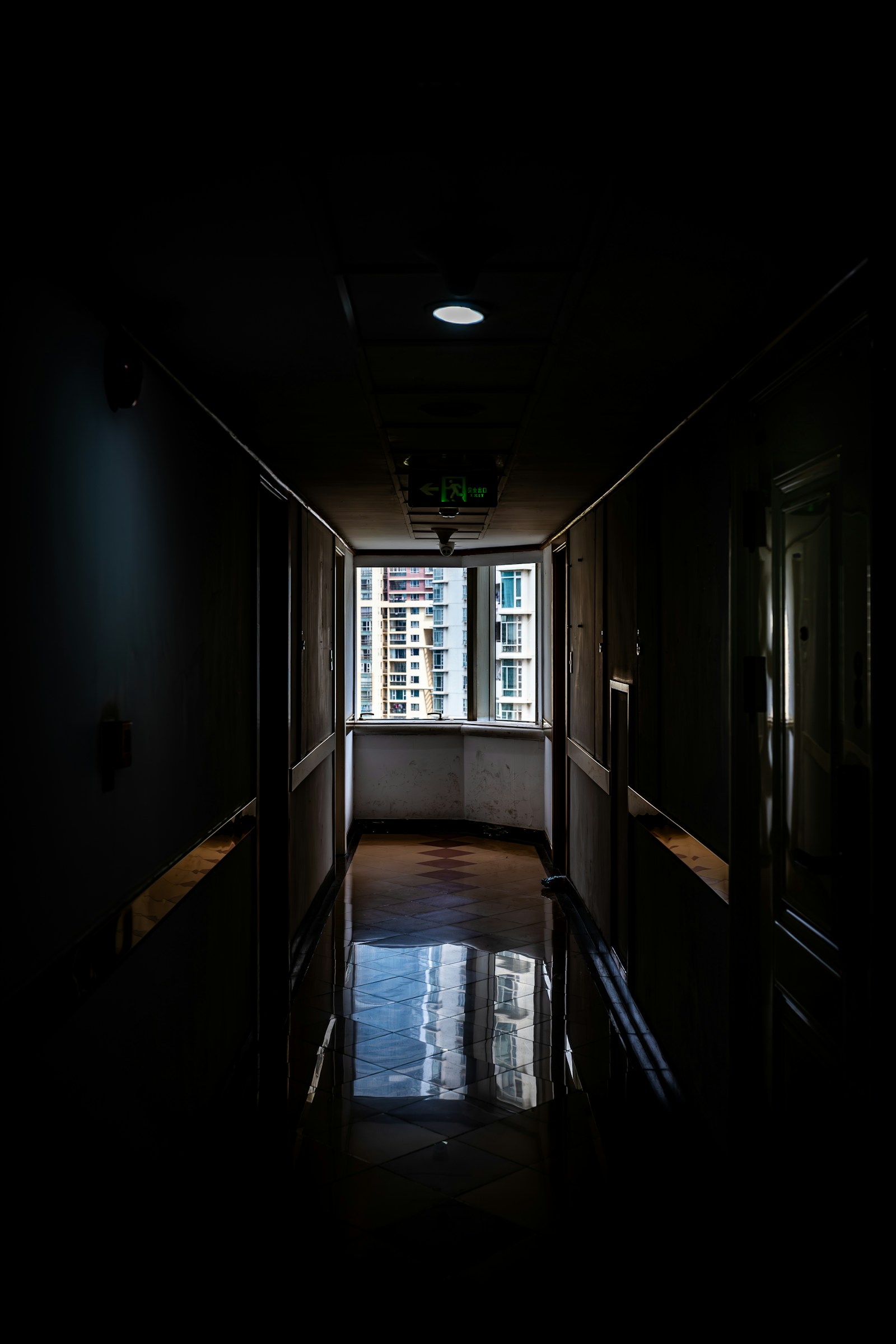

Seeing a back window from the front door does not automatically make a home a severe feng shui case. The alignment matters when the entrance, the rear opening, and the main walking path form one uninterrupted line. That line can pull your eye and your movement through the home before the entry has a chance to feel settled.
Check the circulation before deciding that you need a screen or symbolic cure. Some homes need a clearer pause near the entrance. Others only look dramatic from one viewing angle.
Want to test your own layout instead of guessing from the entry? Mark the door and overall plan in the nine-grid tool.
Start with the path, not the view
Stand at the open front door, then walk the route you normally take into the home. Check four things:
- Do your front door and rear opening sit on the main axis of the floor plan?
- Is there a wall, piece of furniture, or turn between them?
- Is that same path also the route you walk every single day?
- Do your eye and body get pulled straight through the space as soon as you enter?
If the rear opening is offset, partly screened, or reached only after a turn, the alignment is usually mild. A visible window by itself is not enough to diagnose a strong rush line.
Why feng shui cares about this layout
Windows are not the problem. Feng shui pays attention to whether the entrance can receive movement before that movement is pulled toward the back of the home. A funnel is a useful comparison: without anything in the middle, attention goes straight to the far opening.
Homes with this pattern often feel:
- fast from the moment you cross the threshold
- visually slippery, with the eye drawn straight to the back
- difficult to anchor around the main sitting area
- more like a passage than a place to pause
The same open plan can feel airy in one home and restless in another. Furniture, distance, and the use of the middle zone usually explain the difference.
Three patterns that matter most
1. Front door aligned with a back door
This is usually the strongest version because both ends are circulation points. People walk through them, so the line is reinforced in daily use.
2. Front door aligned with a large window or balcony door
A wide rear opening can create the same effect when there's nothing in the center of the plan to slow things down.
3. The same line doubles as your main daily path
If most daily movement follows the same line, the home can keep feeling hurried even when the rear opening is not especially large.
Create a landing point before adding a divider
A mild alignment often needs an anchor rather than a barrier. Try one change at a time:
- A rug that defines the arrival area
- A console, cabinet, or shelf near the entry
- A stronger focal point in the middle of the plan
- Keeping your main sitting zone off the direct path
These changes give the eye somewhere to rest without narrowing the entry or blocking natural light.
When you do need stronger separation
Stronger separation makes sense when the plan opens from front to back with no turn, landing area, or useful middle zone.
The most stable options tend to be:
- A low divider or console that gently breaks the line
- A light screen rather than a heavy wall-like partition
- Curtains or soft window treatment at the far opening to dial down the visual pull
- Furniture placement that steers attention toward the living zone instead of the exit
The aim is to redirect attention while keeping useful ventilation and daylight.
What not to overdo
This layout is easy to overcorrect. Avoid:
- A divider so big it makes the entry tight and dark
- Mirrors that intensify the direct line
- Treating every front-to-window view as a severe case
- Hanging symbolic cures without changing the actual path or focal points
The adjustment should make the entrance easier to use and the living area easier to notice. It should not turn the home into an obstacle course.
The middle of the plan decides the priority
The area between the two openings often matters more than the openings themselves. Check:
- Is there a sofa, dining table, or cabinet anchoring the space?
- Does your main sitting position land right on the rush line?
- Is there any visual stop between the two ends?
- Is the rear opening small and secondary, or large and dominant?
Those details show whether the alignment controls the home or merely appears in the view from the doorway.
When the tool beats guessing
Checking by eye becomes unreliable when:
- Your front door is off-center
- The rear opening is a balcony door plus windows rather than one clean opening
- There's a long hallway involved
- Your floor plan isn't a simple rectangle
In those cases, map the whole layout instead of relying on the view from the threshold.
To check whether the front door and rear opening form a strong through-line, run the full layout through the nine-grid tool. The full plan makes it easier to distinguish a mild visual alignment from a circulation problem.