

A desk under the window can look like the obvious choice. Then you sit down after lunch, the screen fills with reflections, and you pull the curtains shut. Across the room, the spot that lets you see the door might leave your chair in front of the wardrobe.
This is where home office feng shui gets more useful, and less tidy, than a picture of the perfect desk. You have to choose between positions that each give something up. Start with the room you have, including what happens when someone is actually sitting at the desk.
If you are also deciding which room to work in, you can start with a free AI-assisted floor plan assessment. Review the recognized layout and confirm its orientation first. Use the report for the wider home layout, then check the desk's light and clearances in person.
See the doorway, but keep the doorway usable
Feng shui practitioner Anjie Cho describes the desk's command position as a position where you can see the room's entrance without sitting directly in line with it. That gives you a starting point for a sketch, not a reason to move everything into the middle of the room.
Sit in the proposed position before moving the desk. Can you notice someone entering? Does the open door hide the entrance from view? A tall monitor or shelf may block the sightline that looked clear on paper.
You should still face your screen normally while working. Being able to check the doorway does not mean keeping your neck turned toward it all afternoon. Keep the keyboard and main screen in front of your seated position.
Then pull the chair back as if you were getting up. If another person has to squeeze around it to reach the bathroom, the layout needs another look. A desk can fit against a wall while its working space does not fit the room.
The command position is a feng shui convention. It is not a guarantee of better concentration, a promotion, or higher income.
A window beside the desk is worth trying first
The brightest corner is not automatically the easiest place to read a screen. For glare control, OSHA's workstation guidance recommends placing screens at right angles to windows and adjusting the setup to avoid reflections.
Try a position with daylight arriving from the side. Open the document or application you normally use, rather than judging the desk with the screen switched off. Check it again at the time of day when sunlight reaches that room.
A window directly in front of you may put a bright outdoor view behind the screen. A window behind your chair may reflect in it. Neither arrangement can be judged from a floor plan alone: curtains, neighboring buildings, and the angle of the sun change the result.
Before buying a different desk, try turning the monitor slightly or adjusting an existing blind. If that solves the problem and the room still works, there may be no reason to move the furniture.
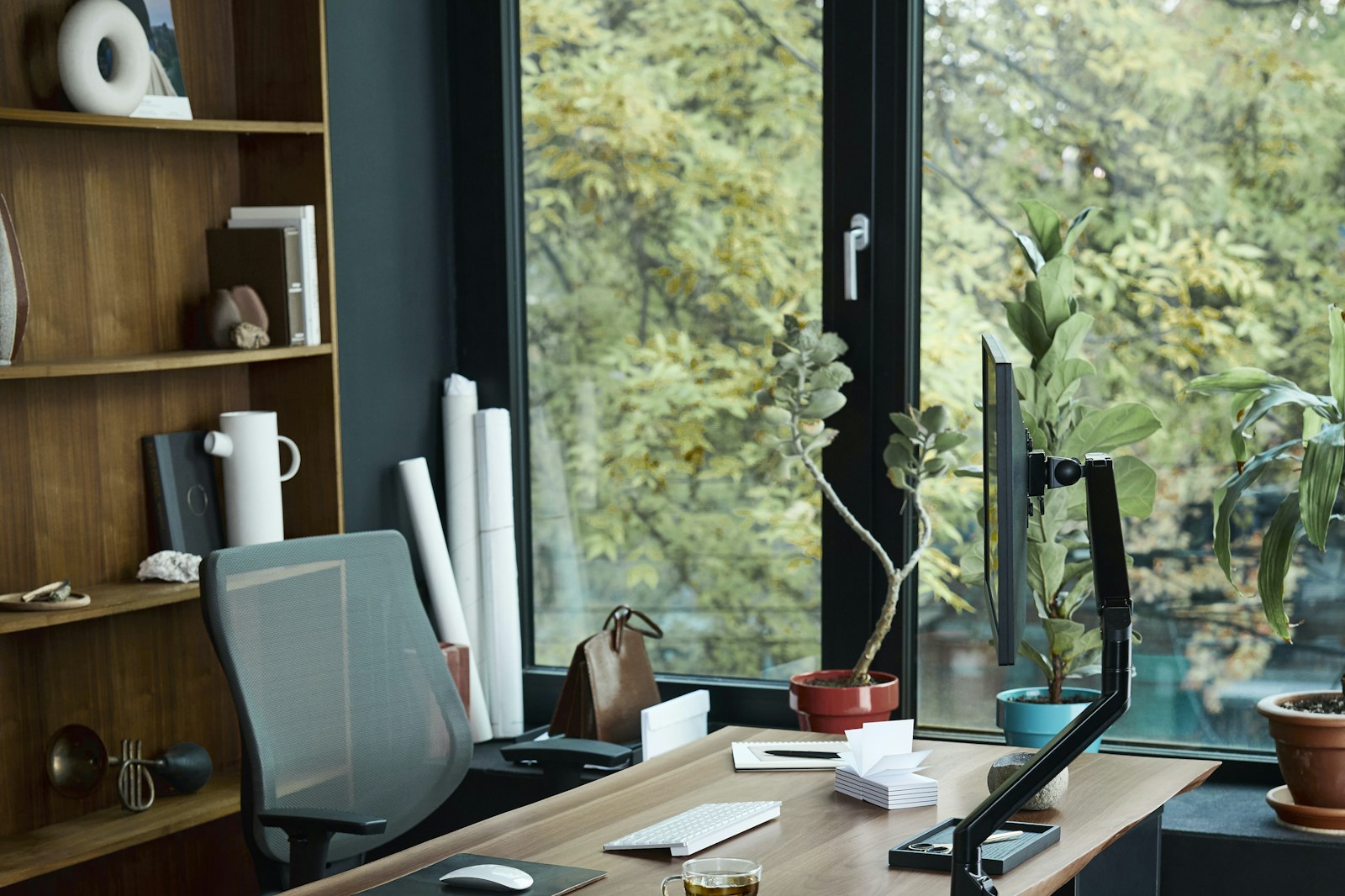
The cover photograph is useful inspiration for side lighting and materials. It does not show the whole room or doorway, so it cannot demonstrate a complete feng shui layout.
What if the desk has to face a wall?
A wall-facing desk may be the only arrangement that leaves a narrow room usable. Rotating it just to face the door can turn an ordinary work corner into an obstacle.
Check what bothers you about the current position. Is it that people approach from behind? That the screen feels too close? Or that the desk has become storage for everything without a home? Those problems need different changes.
If people passing behind you are the issue, moving to the other end of the same wall may help. If papers crowd the keyboard, a nearby drawer may do more than rotating the desk. Keep the items you use each day within reach, and move the rarely used ones off the working surface.
You do not need to fill the wall with symbols to make the corner acceptable. A rental room with a fixed desk may need a workable compromise, not another purchase.
When your office is also your bedroom
In a shared bedroom-office, moving the desk can affect the bed, wardrobe, and route to the door. Check those together. A new work position is not much of an improvement if you have to climb across the bed to open a drawer.
If two positions work equally well, try the one that leaves unfinished work less visible from your pillow. But do not give up the room's only comfortable route or cover its only window just to hide a laptop.
You can also change what remains on display at night. Close the laptop, put loose papers in a tray or drawer, and tuck the chair in. Turn off the work lamp when you finish. This gives the desk a clear stopping point even when it cannot disappear behind a door.
A curtain or screen is optional. Before adding one, check how it affects daylight and access. In a small bedroom, a bulky divider may be harder to live with than the desk itself.
Compare two positions before buying anything
Imagine a small room with a window on one wall, a wardrobe opposite, and a door near the corner. This is a hypothetical example, not a client case.
One option puts the desk beside the window. You can see the doorway at an angle, but the chair overlaps the wardrobe's opening space. Another option puts the desk along the side wall. The doorway view is less direct, but both the wardrobe and walking route remain usable.
I would test the second option before purchasing a smaller desk to make the first one work. Use a chair and a taped outline of the desk to compare them. Include the full opening of the wardrobe, and check where the power cable would run. Do not trail it across the route to the door.
When you have a workable arrangement, use it for a normal workday. Note the actual annoyance: afternoon glare, a blocked drawer, someone walking behind every few minutes. Change that specific thing before starting the whole layout again.
Does your desk need to face a lucky direction?
This article does not prescribe one compass direction for every home. The direction your chair faces is also different from the desk's location within the home's nine-grid map. Turning the desk does not move the room into another part of the house.
For this practical placement check, keep safe access and a usable workstation ahead of an idealized arrangement. A free floor plan report can help you understand the overall layout, but it cannot tell you whether your monitor catches sunlight at three in the afternoon.
If you need that wider view, upload your floor plan for a free assessment, check the AI-recognized details, and confirm north before generating the report. Keep a separate note of the desk positions you can realistically use.